
A message from Dr Chris Bollen
Kidney health starts in primary care
Kidney Health Australia’s ambition to End Dialysis by 2050 is bold, but it requires the practical, everyday work of general practice: identifying people at risk, completing Kidney Health Checks, coding CKD accurately, and acting early. Chronic kidney disease (CKD) is common, harmful and too often missed. A significant proportion of an active adult general practice population will have at least one risk factor for CKD, including diabetes, hypertension, cardiovascular disease, older age, obesity, smoking or vaping, previous acute kidney injury, family history of kidney failure or First Nations origin. Yet many people with CKD are unaware they have it. This matters because CKD can progress silently, increase cardiovascular risk, and lead to kidney failure; but it is also increasingly treatable when detected and managed early.
A Kidney Health Check is simple and achievable in routine primary care. It includes a blood pressure check, a blood test for creatinine and estimated glomerular filtration rate (eGFR), and a urine test for albumin creatinine ratio (uACR). The gap is not only clinical; it is also systematic. CKD needs to be diagnosed, coded in the practice software, and visible to the whole team. If people are not coded, they are harder to find, recall, review and support. Practice extraction tools such as PENCAT, POLAR or Primary Sense can help identify patients who may be at risk, overdue for testing, or likely to benefit from review. Turning this data into action is where general practice teams can make a real difference.
One practical approach is to build Kidney Health Checks into chronic condition care planning (MBS item 965) and regular reviews, (MBS item 967). A proactive checklist for patients can help everyone involved in the patient’s care know when the last Kidney Health Check was completed and when the next one is due. This reduces reliance on memory or individual clinicians and supports more consistent, team-based care.
CKD also lends itself well to quality improvement. Practices could set a clear SMART goal, such as increasing the proportion of active adults with a coded diagnosis of CKD. Converting percentages into patient numbers can make the goal more tangible and help teams decide how many people need to be reviewed each week or month. The team at Bollen Health suggest making CKD a QI activity. Focus on a QI SMART goal such as:
• “Increase the percentage of active adults with a coded diagnosis of CKD to 10% of the active practice population by December 2026” or
• “Increase the percentage of people with diabetes having a urine ACR in the previous 12 months to 95% by December 2026” or
• “Increase the percentage of coded CKD diagnoses amongst our active adults aged 65+ by 20%, from a baseline percentage of X%, by December 2026”.
Better kidney outcomes depend on better systems and supported teams. Responsibility for proactive care cannot rest solely with the GP, particularly in busy practices with part-time clinicians, seven-day rosters and patients seeing different providers. Nurses, practice managers, reception teams and data leads all have a role in identifying care gaps, supporting recall and reminders, and embedding kidney health into routine workflows.
As Atul Gawande highlights in The Checklist Manifesto, simple checklists can help reduce variation and prevent important steps being missed in complex systems. In primary care, a Kidney Health Checklist can be a practical tool for early detection, safer prescribing, timely management and appropriate referral. Primary care is where prevention, early diagnosis and long-term management come together.
By making Kidney Health Checks routine, coding CKD consistently, using practice data well and involving the whole team, general practice can help prevent progression, improve lives and contribute to a future where fewer Australians need dialysis.
Dr Chris Bollen
GP & Healthcare Consultant
Bollen Health


Connect
Facebook -bollenhealth
LinkedIn - Chris Bollen & Bollen Health
Did you know?
Professional development

Closing the CKD detection gap: the importance of uACR testing
WEBINAR
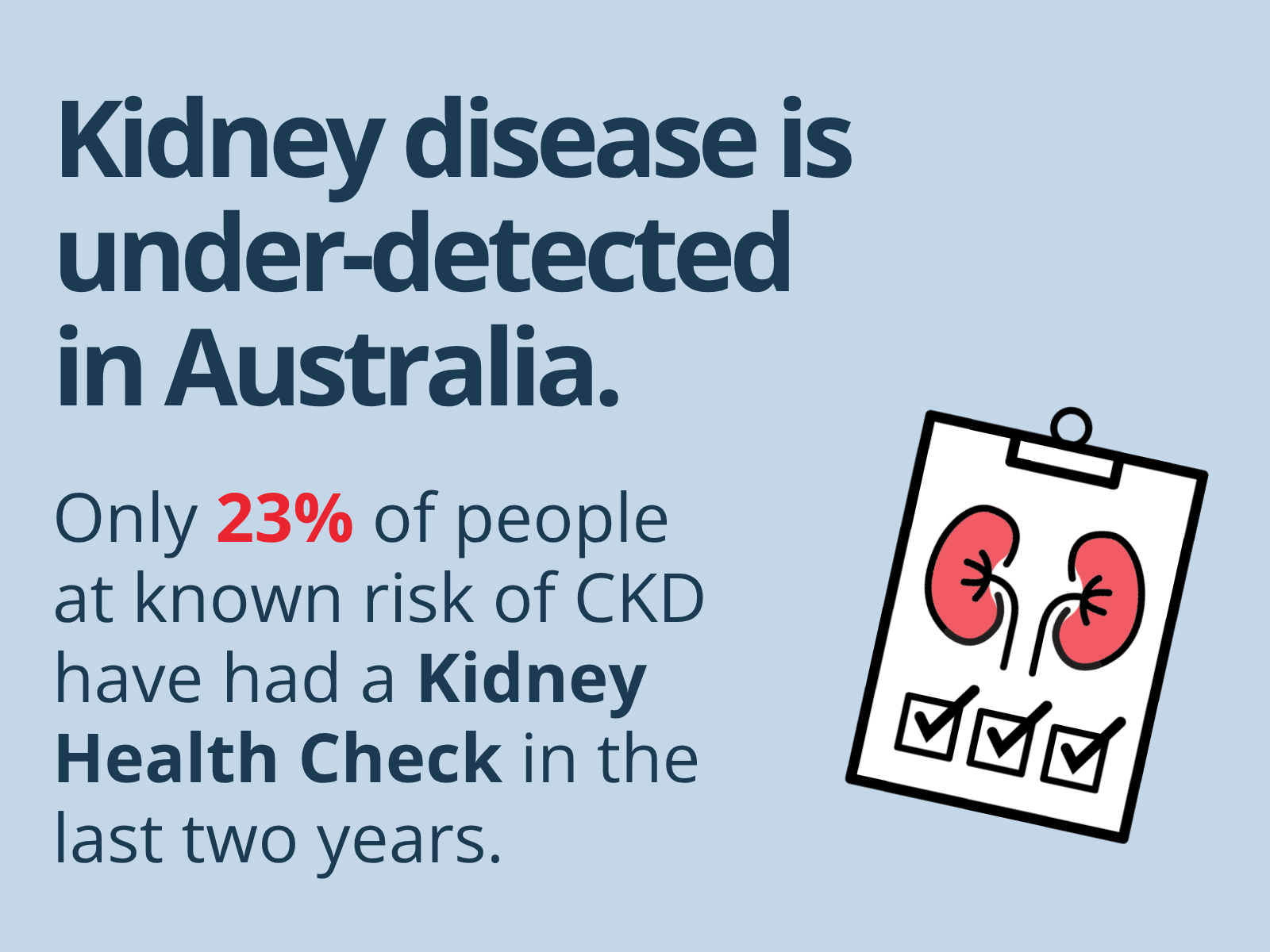
In Australian Primary Care, uACR testing is underutilised for investigating chronic kidney disease. With only 23% of people having had a complete Kidney Health Check in the last 2 years.

Join Prof Shilpa Jesudason, Dr Chris Bollen, and Kidney Health Australia for a webinar diving into why and how uACR is vital to kidney disease diagnosis and management.
Register
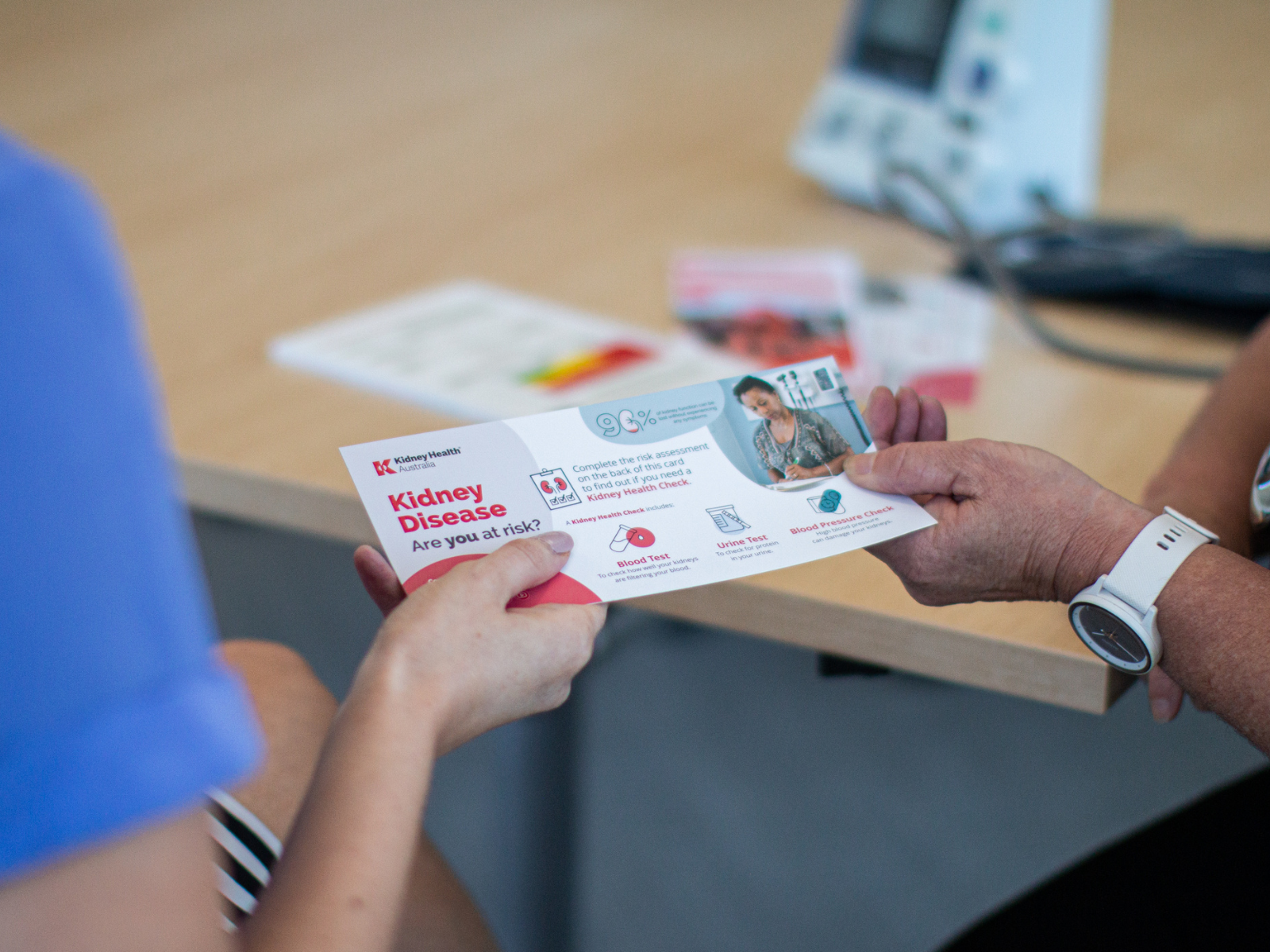
Primary Care QI activity - CKD Sprint
In your practice today, 3 out of 4 adults have risk factors for CKD.
In August, Kidney Health Australia invites you to intensify your efforts in a CKD Sprint to complete Kidney Health Checks on as many of these patients visiting your practice as you can.
This Kidney Action Week, enroll your practice in our CKD Sprint.
Receive all-staff education for your practice, and a practice kit. Accredited CPD hours through RACGP are available upon completion of all of the CKD Sprint activity elements for eligible participants.

Managing CKD in primary care - webinar recording

Discover how to detect and diagnose at risk populations for CKD through this recorded webinar. Gain 1 EA CPD hour.
Managing CKD in primary care - Chapter 2 follow up activity

Complete this online activity to implement your learning from the Managing CKD in primary care webinar. Self-report from 3 CPD hours, 1 EA, 1 RP, and 1 MO category hours.
Extended reading:

NPS MedicineWise. MedicineInsight data snapshot: chronic kidney disease: early detection and management. Australian Commission on Safety and Quality in Health Care.
Read
Five-year outcomes of chronic kidney disease in a longitudinal population-based cohort in Western Australia.
ReadResources

How to Guide - stage and diagnose CKD
About how to diagnose and stage CKD in this 'How to' guide which provides an overview of the steps involved in diagnosing and staging CKD, and what to do next.
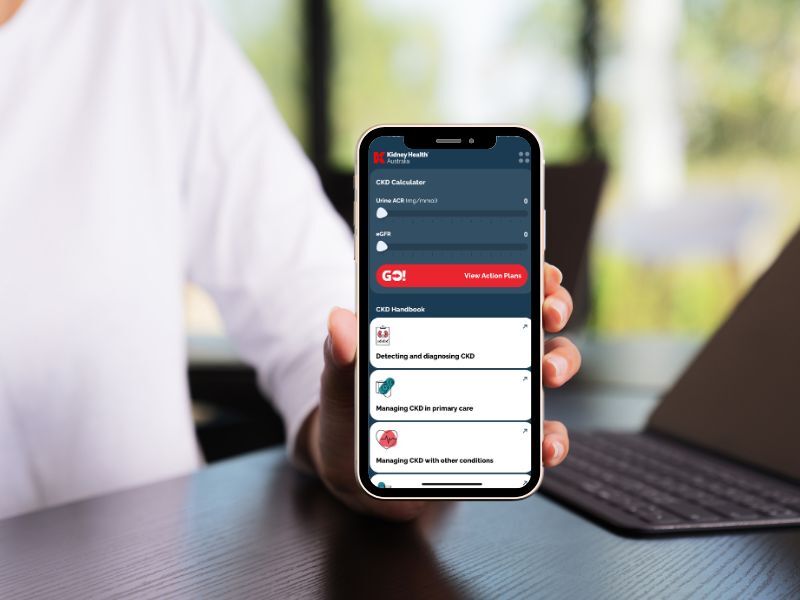
DownloadNavigate through the CKD handbook via the CKD-Go! App,
available on iOS, Android, and web app.

Kidney Code Red - a mandate for urgent action to end the kidney crisis
Recommendation #1
1.2 Increase awareness of CKD detection and management in the health professional community highlighting:
Do not miss the urine test (uACR).
Test for CKD with the Kidney Health Check.
Complete steps for diagnosis of CKD
For your patients

Albuminuria - Factsheet for patients
Help your patient understand what albuminuria means, the causes and treatments.
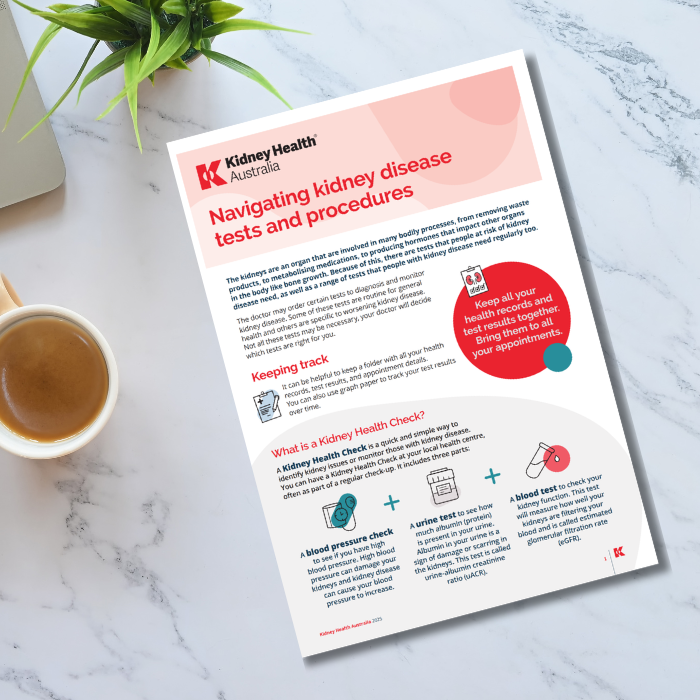
Navigating kidney disease tests and procedures - Factsheet for patients
Help your patients understand the common tests used for diagnosing and monitoring kidney disease.
Download factsheet
Kidney Health 4 Life
Kidney Health 4 Life Quick Reads
Kidney Health 4 Life empowers patients to take control of their kidney health with confidence.